
The Bucks County Honey Show 2025
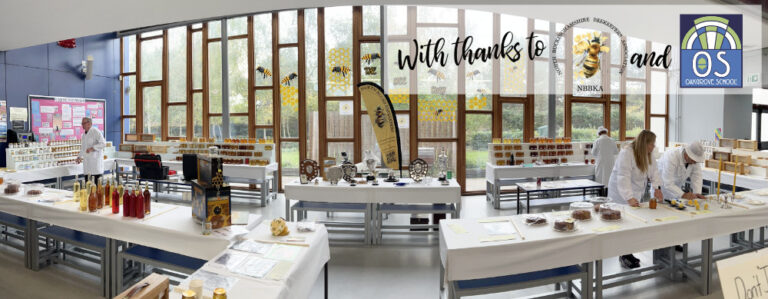
The Bucks County Honey Show 2025 was hosted by NBBKA on Saturday October 4th at Oakgrove School, Milton Keynes.
In 2025 the Bucks County BKA held its annual County Honey Show at Oakgrove School in Milton Keynes, bringing together local beekeepers, enthusiasts, and schoolchildren to celebrate the hard work and rich diversity of honey, wax, and hive products.
The event made special use of Oakgrove’s status as a BBKA Beacon School, which underpinned much of the school’s involvement and emphasis on education around bees and beekeeping. Oakgrove is only the second school in the country to have been granted Beacon School status by the British Beekeepers Association, a recognition of excellence in integrating beekeeping into its curriculum and community outreach. The school maintains upto 20 hives on site, and the students run a Bee Club, conduct apiary work, harvest honey, and share best practices with other schools and the local community. Each hive produces between 50 and 80 jars of honey annually, part of which is sold to help fund equipment and club activities.
Always a popular and contested show, this year was no exception.
Total of 37 people put 416 entries into both Honey Shows. North Bucks BKA accumulated the most points with 176, followed by Chalfonts BKS with 62, then Mid Bucks BKA, followed by High Wycombe BKA with 33 points. Caroline Luxford achieved the most points as an individual overall.
A complete list of the classes, prizes and winners can be found here.
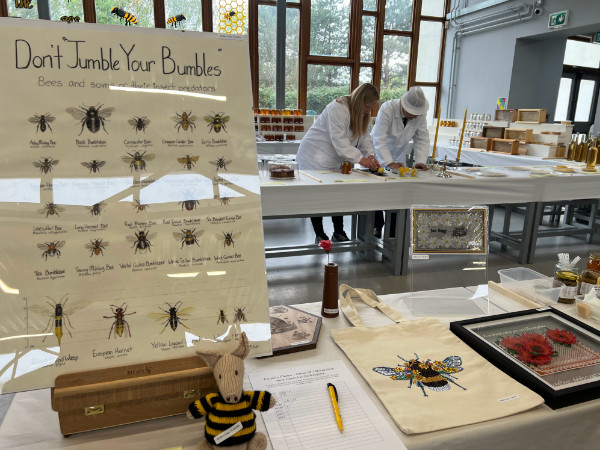
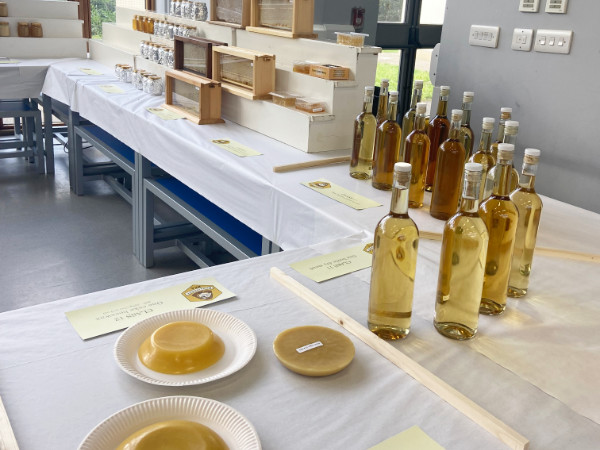
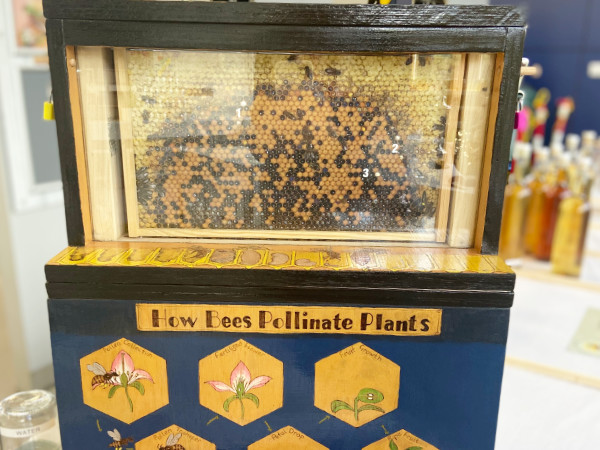
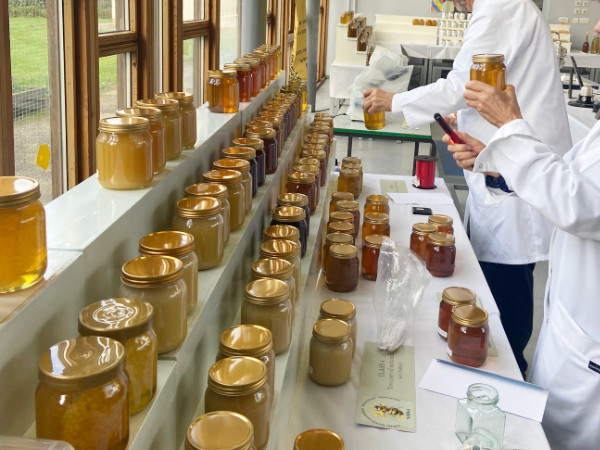
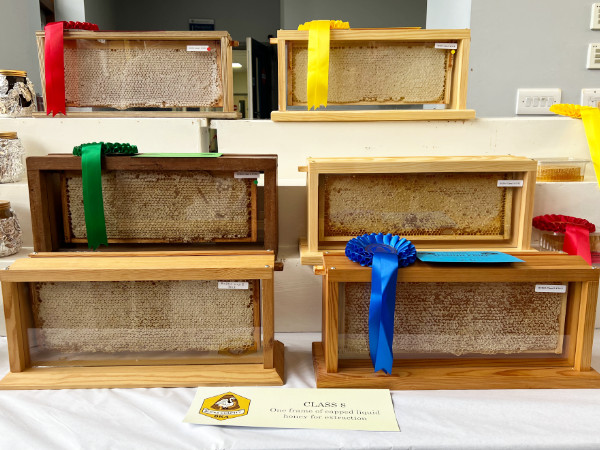
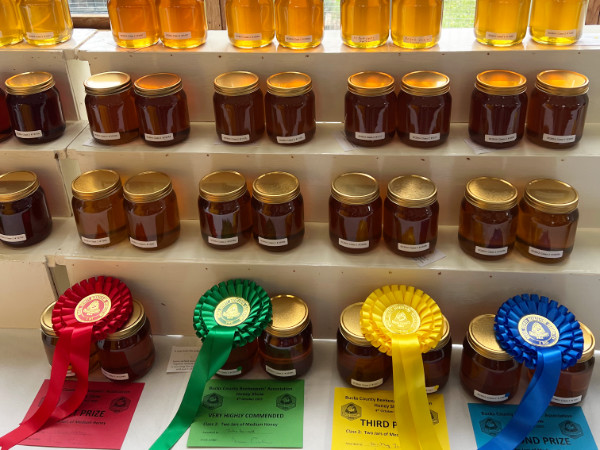
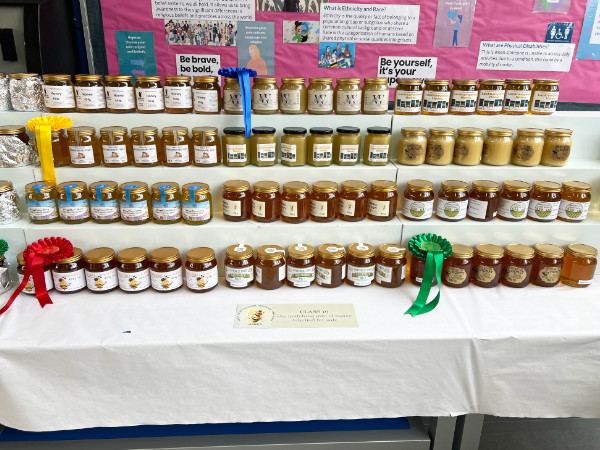
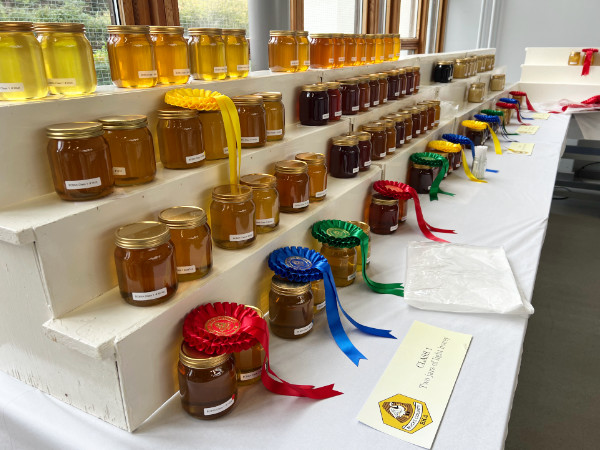
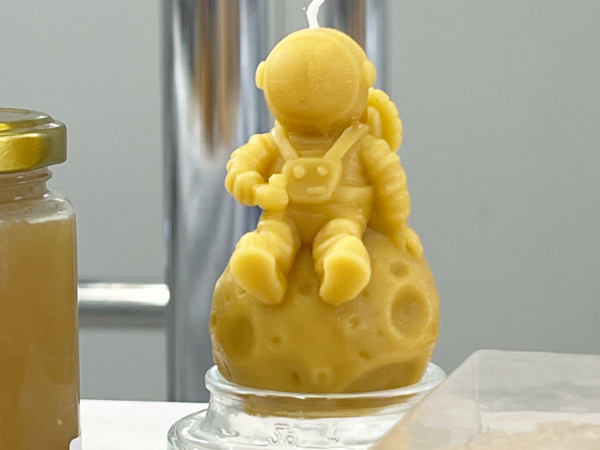
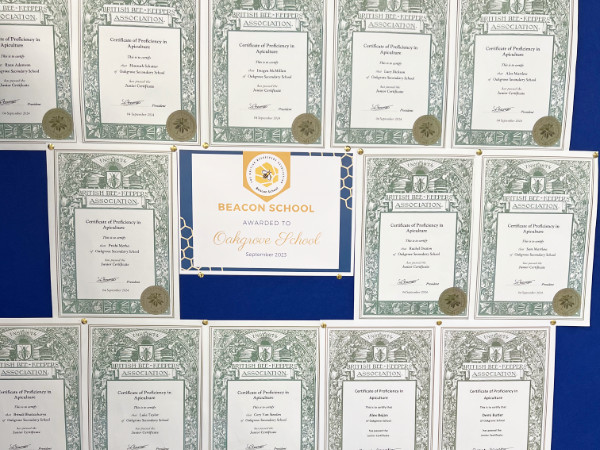
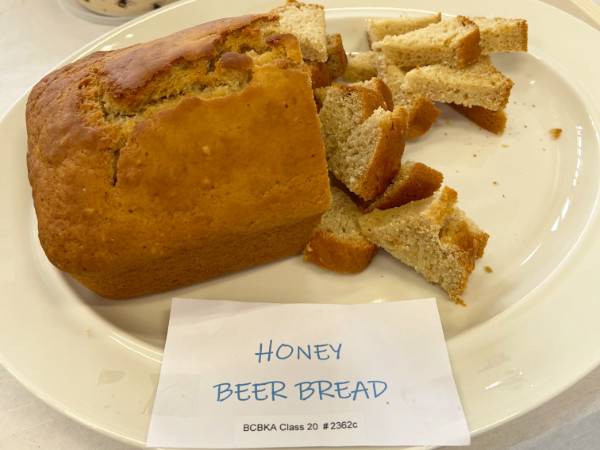
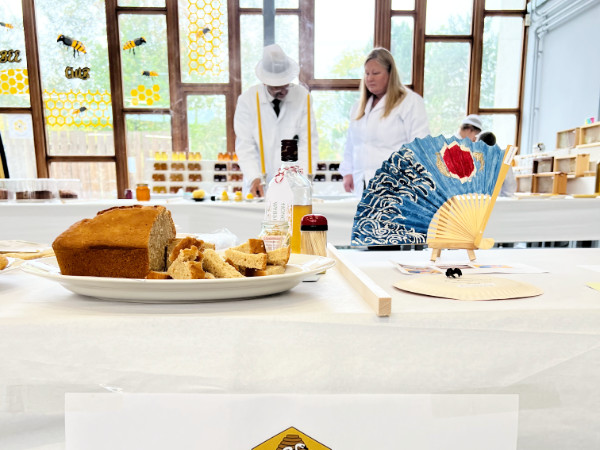
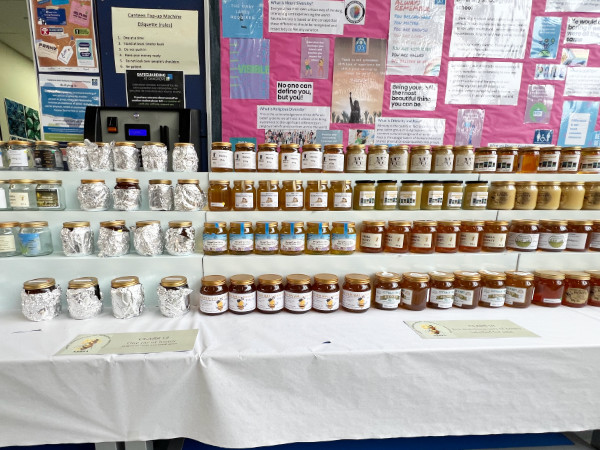
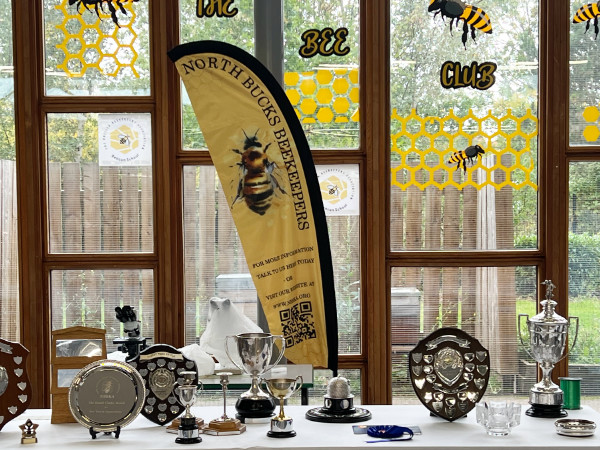
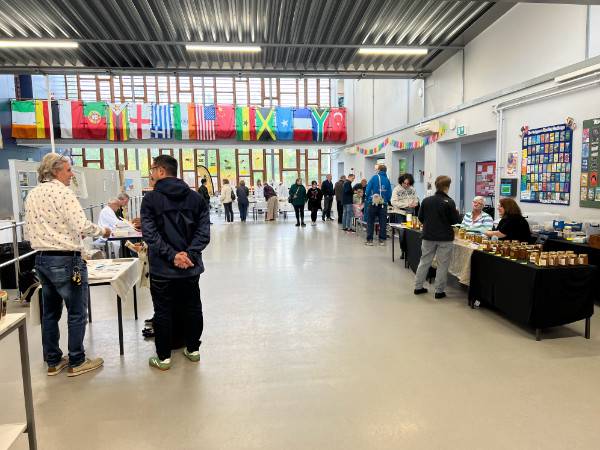
The Honey Show followed the familiar format of jars of different types of honey, beeswax, comb, candles, and creative or educational exhibits. Amid the competition, one of the standout features of the day were two presentations, the first by Margaret Murdin and the second by the school’s own beekeeping team.
Margaret Murdin NDB, a National Diploma Beekeeper and Master Beekeeper, who delivered a talk entitled “Reading a Colony”. Drawing on decades of experience, Margaret talked about the clues a beekeeper must observe in hive behaviour, brood pattern, temperament and seasonal development. She emphasised how much can be inferred about a colony’s health, queen status, disease pressure, and forage conditions by careful inspection, interpreting the behavioural signals of the bees themselves (such as clustering, orientation flight, forager return, and brood capping characteristics). Her talk also underscored the importance of minimal disruption, gentle handling, and building a mental “story” of the colony over time.
The second presentation, delivered by John Leadbetter and assisted by Luke, presented Oakgrove School’s approach to keeping bees and how it integrates them into the school culture. John talked about how the school balances educational goals, hive management, safety, and community outreach, essentially turning their apiary into a living classroom. He explained the decisions behind hive placement, the rotation of frames, swarm prevention, and how the Bee Club mentors younger students in hands-on tasks. Through John’s presentation, visitors could see how the school’s commitment to beekeeping is not just a side hobby but a structured and sustainable model that links directly to learning, citizenship and environmental awareness.
Back in the show, many attendees praised the high standard of exhibits and the smooth organisation of the event. The balance between technical beekeeping talk and the more school-oriented approach meant there was something for both seasoned beekeepers and novices or school visitors.
Overall, the County Honey Show at Oakgrove succeeded in showcasing not just the best of what local beekeepers can produce, but also the potential for schools to act as beekeeping hubs and educational beacons. It’s likely that this model will continue to inspire other schools and associations in the region for years to come.